
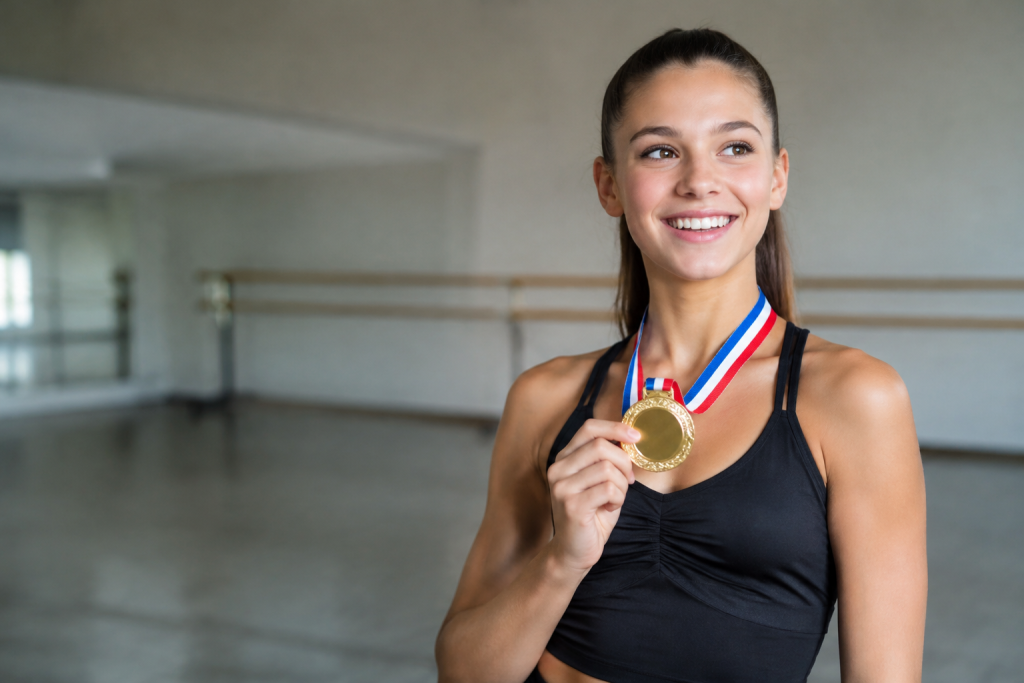
Custom Medals for Dance Competitions and Performing Arts
30/10/2026Dance competitions and performing arts events celebrate much more than winning. They recognise dedication, creativity, confidence, technique and the countless hours dancers spend developing their skills. Whether you are organising a ballet competition, jazz recital, school dance festival or large performing arts presentation, custom medals offer a meaningful way to recognise every achievement.
For Australian dance studios, teachers and event organisers researching custom dance medals, the right design can turn a simple award into a lasting reminder of an important performance. Personalised dance medals can feature studio logos, competition names, event dates, dance-related imagery and individual award categories, making them suitable for everything from junior participation awards to senior championship presentations.
Choosing the right medals involves more than selecting a colour or placing an order. Organisers should consider the dance styles involved, the age of participants, the number of award categories, personalisation options, quantities and event deadlines.
Here is how to plan dance competition medals that performers will be proud to receive.
Why Custom Medals Are Ideal for Dance Competitions
Dance is a performing art that combines physical ability with expression, discipline and creativity. Unlike competitions that focus exclusively on scores or finishing positions, dance events often recognise a wide range of individual qualities.
Custom medals allow organisers to celebrate these different achievements without relying on a single standard award.
For example, a dance studio might present:
-
First, second and third-place medals for competition divisions.
-
Outstanding Performance medals for exceptional stage presence.
-
Best Choreography awards for creative routines.
-
Most Improved Dancer medals to recognise personal development.
-
Participation medals for junior dancers and first-time performers.
-
Special Recognition medals for dedication, teamwork and sportsmanship.
Personalised awards also help create a consistent presentation across different age groups and dance categories.
For annual recitals and eisteddfods, incorporating the event name and year makes each medal a unique keepsake that dancers can look back on long after the performance has finished.
Choosing Medal Designs for Different Dance Styles
One of the most important decisions when ordering custom dance medals is selecting a design that reflects the event.
A medal does not necessarily need to feature a generic dancing figure. Using imagery associated with a particular dance style can make the award more relevant to its recipient.
Ballet Competition Medals
Ballet awards can incorporate elegant imagery such as ballet shoes, pointe shoes, dancers in classical positions or graceful silhouettes.
For ballet schools and academies, softer colour combinations and refined designs can create a sophisticated presentation. Gold, silver and bronze finishes are also suitable for distinguishing competition placements.
Jazz and Contemporary Dance Awards
Jazz and contemporary dance often involve expressive movement, musical interpretation and individual creativity.
Dynamic dancer silhouettes, flowing shapes and modern graphic elements can help reflect the energy of these performances.
For contemporary dance competitions, organisers might also consider special awards for artistic interpretation, originality and emotional expression.
Hip Hop and Street Dance Medals
Hip hop competitions usually have a more energetic visual identity.
Bold colours, urban-inspired graphics and movement-based designs can make these awards feel connected to the performance style.
Possible categories include Best Solo Performance, Best Crew, Outstanding Freestyle and Best Group Routine.
Tap and Ballroom Dance Medals
Tap dance awards can incorporate footwear and rhythmic movement, while ballroom medals might feature partnered dancers or elegant silhouettes.
For ballroom competitions, award categories could distinguish between individual age groups, dance styles and performance levels.
The most effective design is one that connects the medal to the event rather than simply adding decoration.
Personalising Dance Medals With Your Studio or Event Details
Personalisation is what makes a medal feel like it belongs to a particular competition.
Rather than using an identical design for every event, organisers can incorporate details that reflect their dance school, performing arts centre or competition.
Consider including:
-
Dance studio logo: Helps create a recognisable award associated with your academy.
-
Event name: Identifies the recital, eisteddfod or annual competition.
-
Competition year: Makes the medal a dated keepsake.
-
Dance category: Identifies ballet, jazz, contemporary, hip hop or another discipline.
-
Award placement: Clearly distinguishes first, second and third place.
-
Individual achievement: Recognises categories such as Best Choreography or Most Improved Dancer.
Engraved or Printed Medal Designs?
The personalisation method should suit the medal’s construction and available design space.
Engraving is a practical option for adding names, dates or short award descriptions to suitable medal surfaces.
Full-colour printing offers greater flexibility for artwork involving studio branding, colourful graphics and detailed event designs.
Printed centres can also help incorporate distinctive visual elements into a medal.
Concord Trophies offers engraved and full-colour printed award plates, as well as printed centres for applicable awards and medals. The most suitable option will depend on the selected product and its available customisation features.
When planning a personalised order, confirm the artwork requirements, available printing or engraving options and final layout before production.
Choosing the Right Ribbons, Colours and Finishes
The ribbon is an important part of the overall medal presentation. It gives the award its finishing touch and can reinforce the identity of the competition.
For dance studios, ribbon colours can be coordinated with:
-
The academy’s branding and logo colours.
-
The event’s promotional artwork.
-
Individual dance styles or competition divisions.
-
Gold, silver and bronze award levels.
-
School or performing arts programme colours.
Where available, custom ribbons can provide an additional opportunity to display event branding.
Metallic finishes are another popular consideration. Gold, silver and bronze create a familiar competition presentation, while alternative finishes can provide a different appearance for participation or special achievement awards.
When comparing options, consider how the medal, ribbon and printed or engraved details will look together. A simple, well-balanced design is often more effective than overcrowding the medal with too much information.
Creating Meaningful Award Categories for Dance Events
Not every dancer needs to receive an award based solely on competition placement.
Many dance schools and performing arts organisers use presentations to recognise different strengths, individual progress and contributions to the group.
A well-planned award structure can include the following categories.
| Award category | Achievement recognised |
|---|---|
| First Place | Highest-ranked performance |
| Second Place | Second-ranked performance |
| Third Place | Third-ranked performance |
| Best Choreography | Creativity and originality |
| Outstanding Stage Presence | Confidence and audience engagement |
| Most Improved Dancer | Progress and development |
| Best Group Performance | Teamwork and coordination |
| Outstanding Technique | Skill and execution |
| Dance Spirit Award | Enthusiasm and dedication |
| Participation Award | Involvement and commitment |
For junior dance programmes, participation medals can be particularly meaningful. They allow younger performers to celebrate their involvement without making every presentation about winning.
For senior dancers, more specific categories can acknowledge advanced technique, interpretation, leadership and performance quality.
The key is to establish the award categories before ordering so that the correct wording, medal quantities and designs can be planned.
How Many Dance Medals Should You Order?
Working out quantities early helps prevent shortages and unnecessary last-minute orders.
Start by reviewing the event programme and dividing participants into their relevant categories.
For example, a dance festival might include:
-
Junior ballet solos.
-
Senior ballet solos.
-
Jazz group performances.
-
Contemporary dance solos.
-
Hip hop crews.
-
Tap dance competitions.
-
Ballroom partnerships.
-
General participation awards.
Calculate the number of medals needed for each division, taking into account the number of places awarded and whether group performances receive individual medals or one shared award.
For group competitions, decide whether every dancer will receive their own medal. If a crew contains 12 performers and all members are to be recognised, the organiser will need 12 individual awards rather than one group medal.
It is also sensible to allow for any additional recognition categories that may be introduced before the event.
Planning a Bulk Medal Order
Bulk dance medals Australia searches often come from organisers managing large competitions, annual presentations and multi-day festivals.
Before requesting a bulk order, prepare:
-
The total number of medals required.
-
A breakdown of quantities by dance style and award category.
-
The preferred medal designs and finishes.
-
The wording required for each award.
-
Any logos or artwork to be included.
-
The preferred ribbon colours.
-
The event date and required delivery deadline.
Providing this information together makes it easier to assess the available options and obtain an accurate quotation.
Setting a Budget Without Compromising Recognition
Dance competitions can involve dozens of categories and hundreds of participants, so it is important to plan award spending carefully.
The overall cost will depend on the number of medals, selected designs, personalisation requirements and any additional presentation items.
A practical approach is to divide the awards into different groups:
Competition placement medals: Allocate the main budget to first, second and third-place awards.
Special achievement medals: Use personalised wording to recognise individual performance qualities and exceptional contributions.
Participation medals: Choose a suitable design that allows every participating dancer to take home a memento.
Premium presentation awards: Consider complementary trophies, plaques or glass awards for overall champions, outstanding performers or major annual achievements.
This approach allows organisers to provide meaningful recognition across the event while keeping the presentation consistent with their available budget.
Ordering Custom Dance Medals: What Organisers Should Check
Good preparation is particularly important when medals need to arrive before a recital, competition or presentation night.
Before confirming an order, work through the following checklist.
1. Confirm the final award categories
Check spelling, placements, dance styles and award descriptions. This reduces the risk of ordering medals with incorrect wording.
2. Prepare your artwork
If you want to include a studio logo, provide a suitable high-resolution file. Check that the design will remain clear when reproduced at the selected medal size.
3. Review the personalisation
Confirm whether engraving, printed plates or printed centres are appropriate for the chosen product.
4. Check the quantities
Verify the number of individual dancers receiving awards, particularly for group routines and participation categories.
5. Allow time for production and delivery
Personalised awards require preparation and production. Contact the supplier early, provide your event date and confirm the expected turnaround and delivery arrangements before proceeding.
6. Approve the final design
Review the spelling, artwork, layout and award wording before authorising production. This is especially important when ordering multiple medal variations.
For international organisers considering a UK supplier, delivery arrangements, shipping costs and the suitability of the delivery deadline should be confirmed directly before placing an order.
Beyond Medals: Other Performing Arts Awards
Medals are an excellent option for individual performers, but some occasions call for a different type of recognition.
Dance studios may also consider:
-
Dance trophies: Suitable for overall champions and major competition winners.
-
Glass awards: An elegant option for senior performers, instructors and special achievements.
-
Acrylic awards: Useful for contemporary presentation designs and personalised recognition.
-
Wooden awards: A distinctive alternative for studio anniversaries and special presentations.
-
Plaques: Suitable for commemorating outstanding contributions, long-term involvement or significant studio milestones.
Combining medals with selected premium awards can create a more varied presentation ceremony while ensuring that different achievements receive appropriate recognition.
Frequently Asked Questions
1. What should be included on a custom dance medal?
Consider including the dance studio or competition logo, event name, year, dance category and award placement. The available space and personalisation options will determine how much information can be included.
2. Can dance medals be personalised for different dance styles?
Yes. Suitable medal designs can incorporate imagery and wording associated with ballet, jazz, tap, contemporary, hip hop and ballroom. Organisers can also distinguish between solo, duet and group competition categories.
3. Are participation medals suitable for junior dancers?
Absolutely. Participation medals recognise effort, involvement and confidence, making them a meaningful option for younger performers and first-time competition participants.
4. Should dance competition medals be engraved or printed?
This depends on the medal’s material, design and the level of personalisation required. Engraving is suitable for certain text-based designs, while colour printing can accommodate more detailed artwork and logos. Confirm the available options with the supplier.
5. How far in advance should I order dance medals?
Allow sufficient time for artwork preparation, approval, personalisation and delivery. The required lead time will depend on the quantity and complexity of the order. Always provide the event date when requesting a quotation and confirm the expected delivery date before ordering.
Make Every Dance Achievement Worth Celebrating
From a young dancer’s first recital to a senior performer’s competition-winning routine, every stage of a dance journey deserves recognition.
Custom dance medals provide a personal way to celebrate dedication, creativity, improvement and achievement. With thoughtful designs, appropriate award categories and carefully planned personalisation, organisers can create keepsakes that dancers will treasure long after the final performance.
For dance schools, competition organisers and performing arts committees exploring personalised awards, choosing the right medal starts with understanding the event, its participants and the achievements being celebrated.
Explore the medal collection at Concord Trophies or view the printed medal range for available designs.
Concord Trophies has been supplying personalised awards since 1973 and now operates as an online-only retailer, delivering throughout the United Kingdom, including Northern Ireland. If you have a particular design or personalisation requirement, contact Concord Trophies to discuss the available options.
Please note: Concord Trophies is UK-based. Australian organisers should enquire directly about international delivery availability and costs before placing an order.